
Reimagining the Lease Application
Turning a costly, fragmented application into a guided resident experience — while creating a foundation that could scale beyond the application itself.
Led product strategy and end-to-end experience design from problem definition through launch.
Research & insights
UX/UI design
Prototyping
Systems & patterns
Engineering
QA
Leasing operations
Business stakeholders
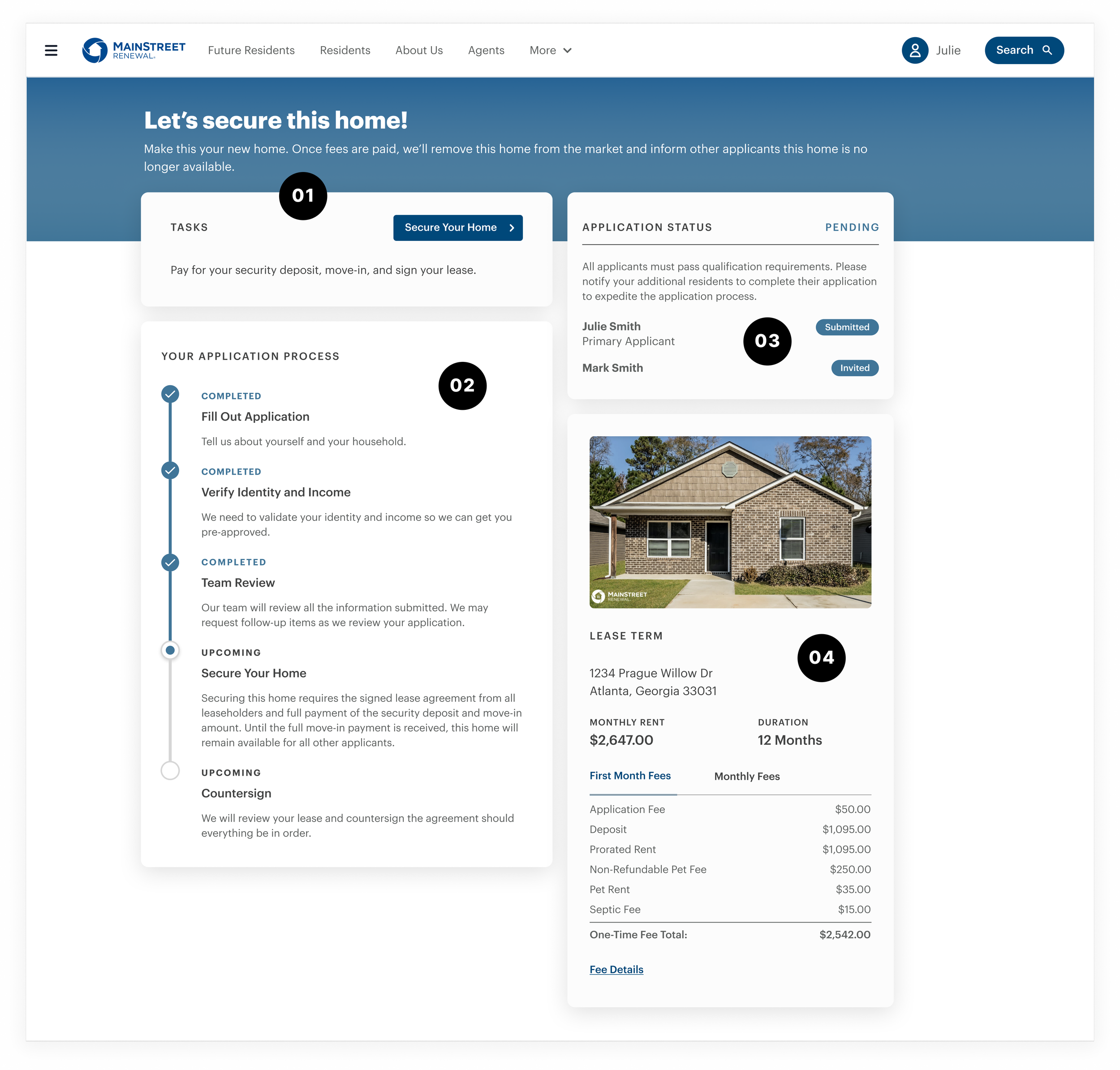
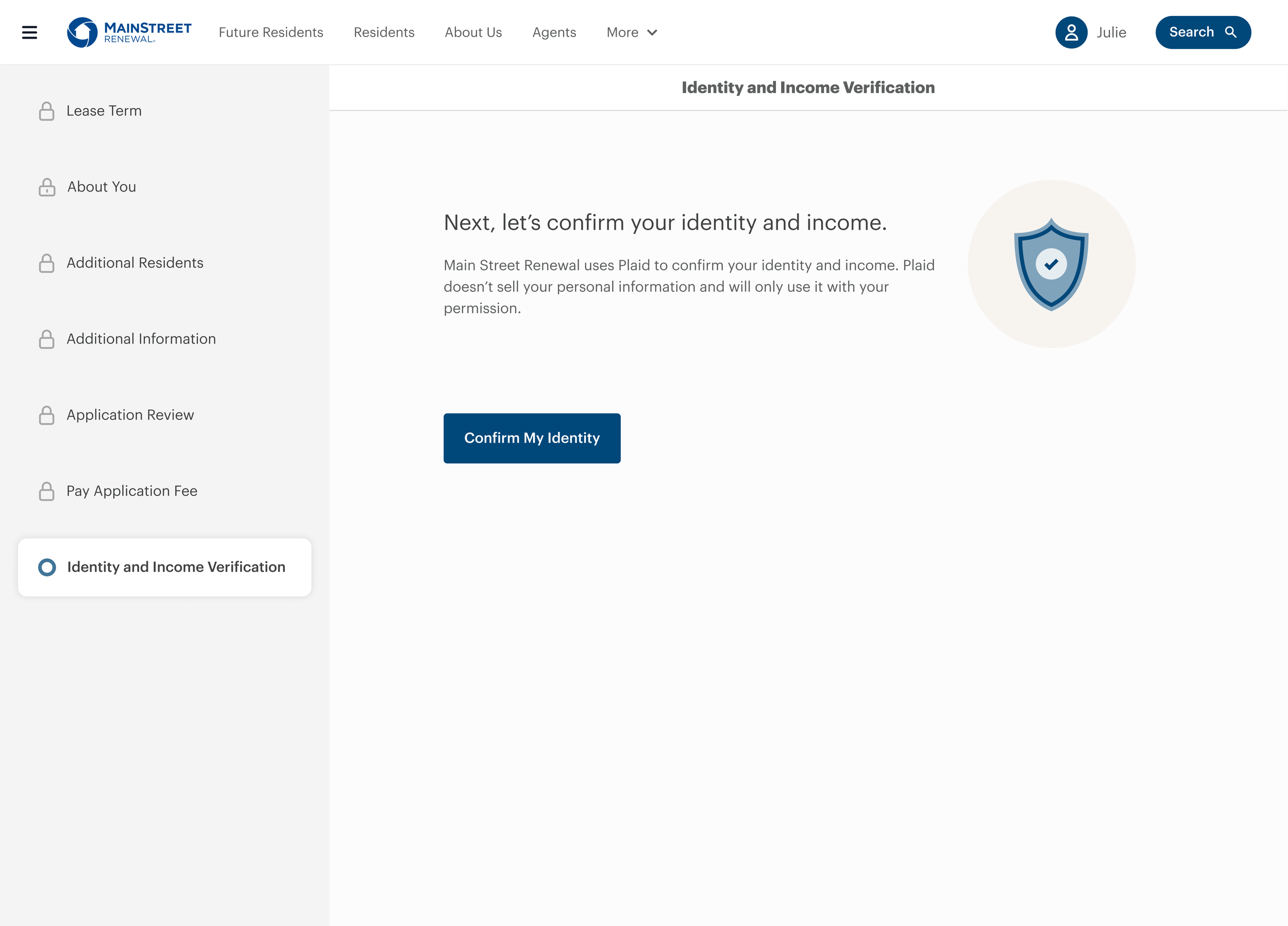
ID & Income verification
Household management
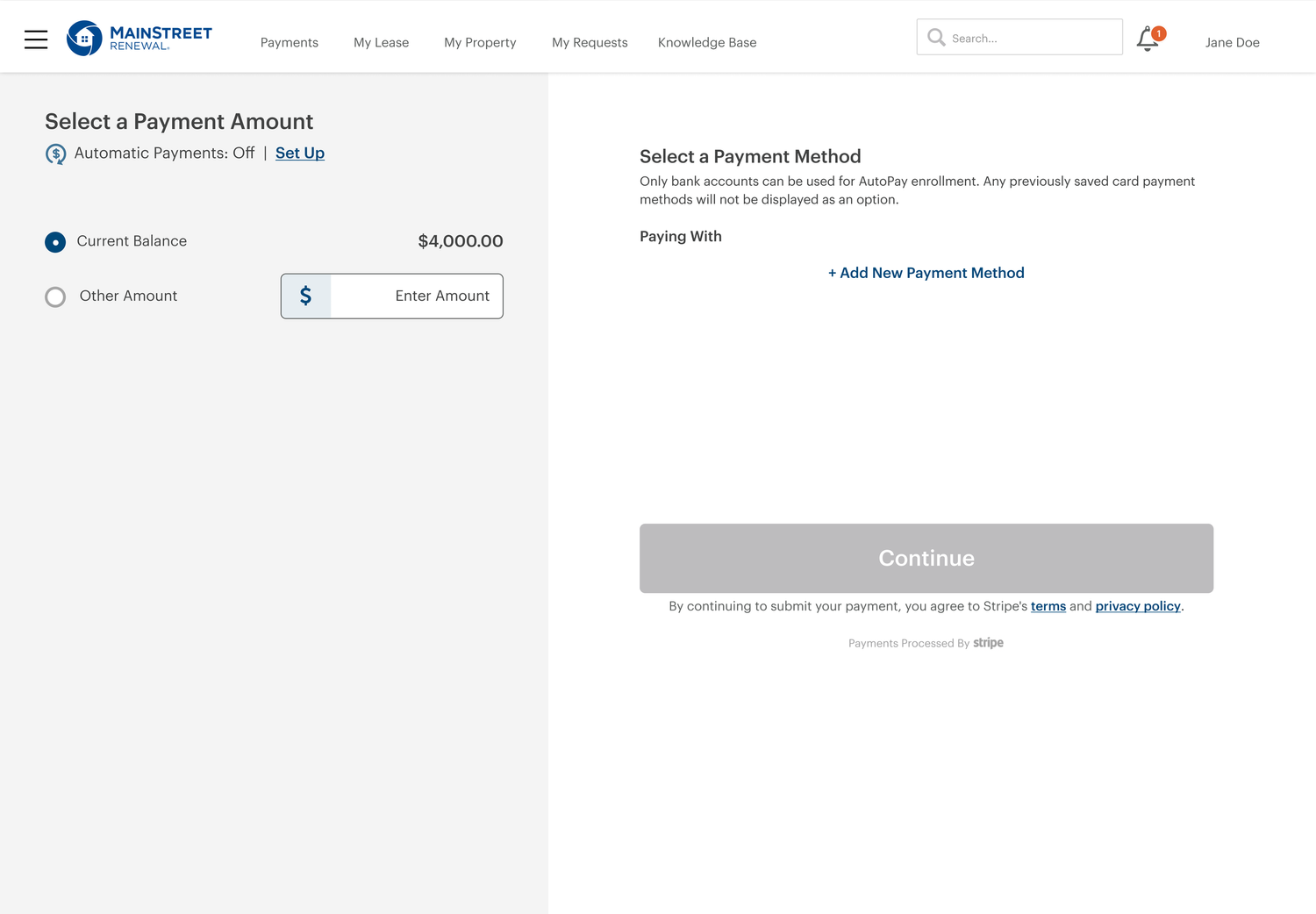
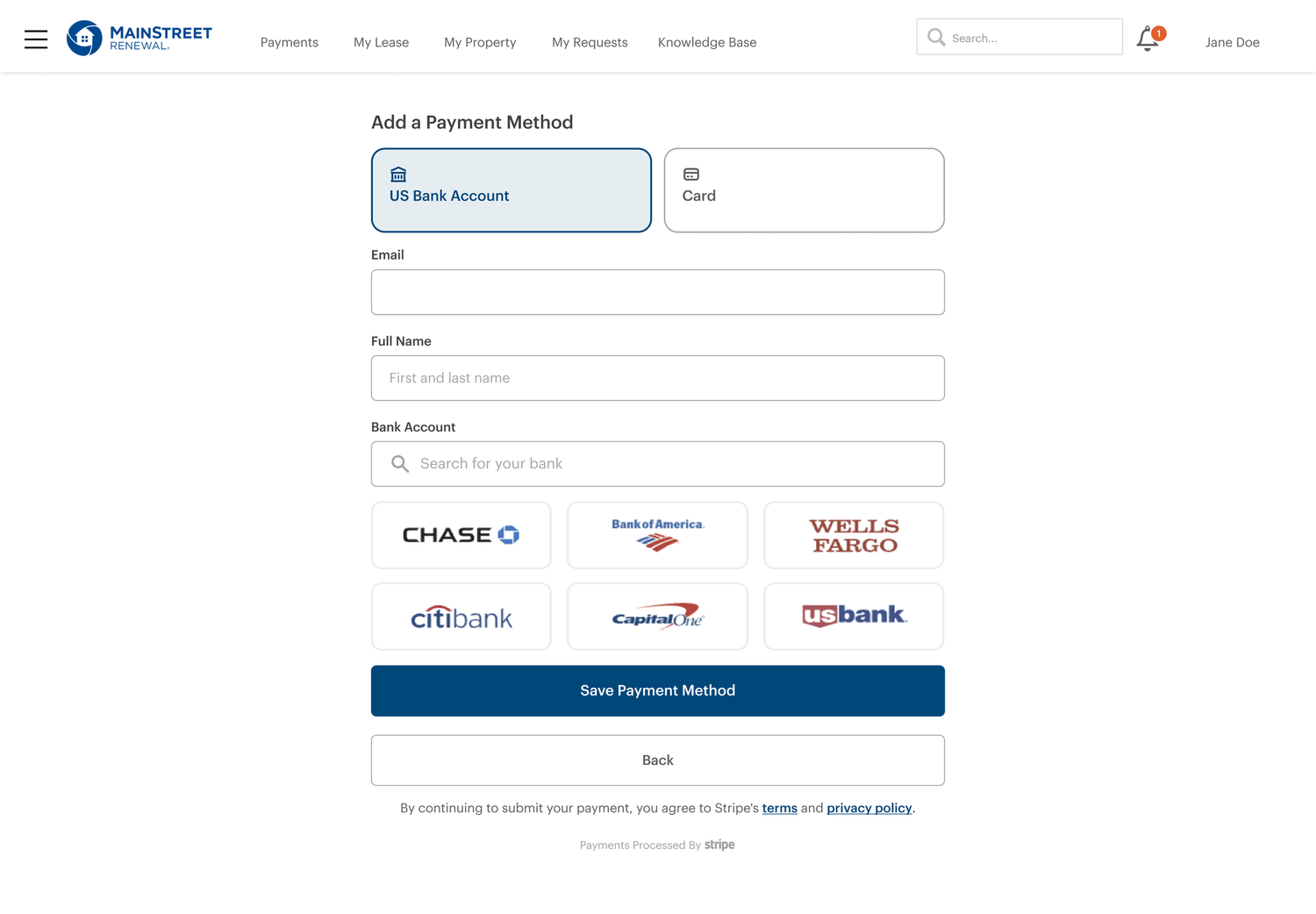
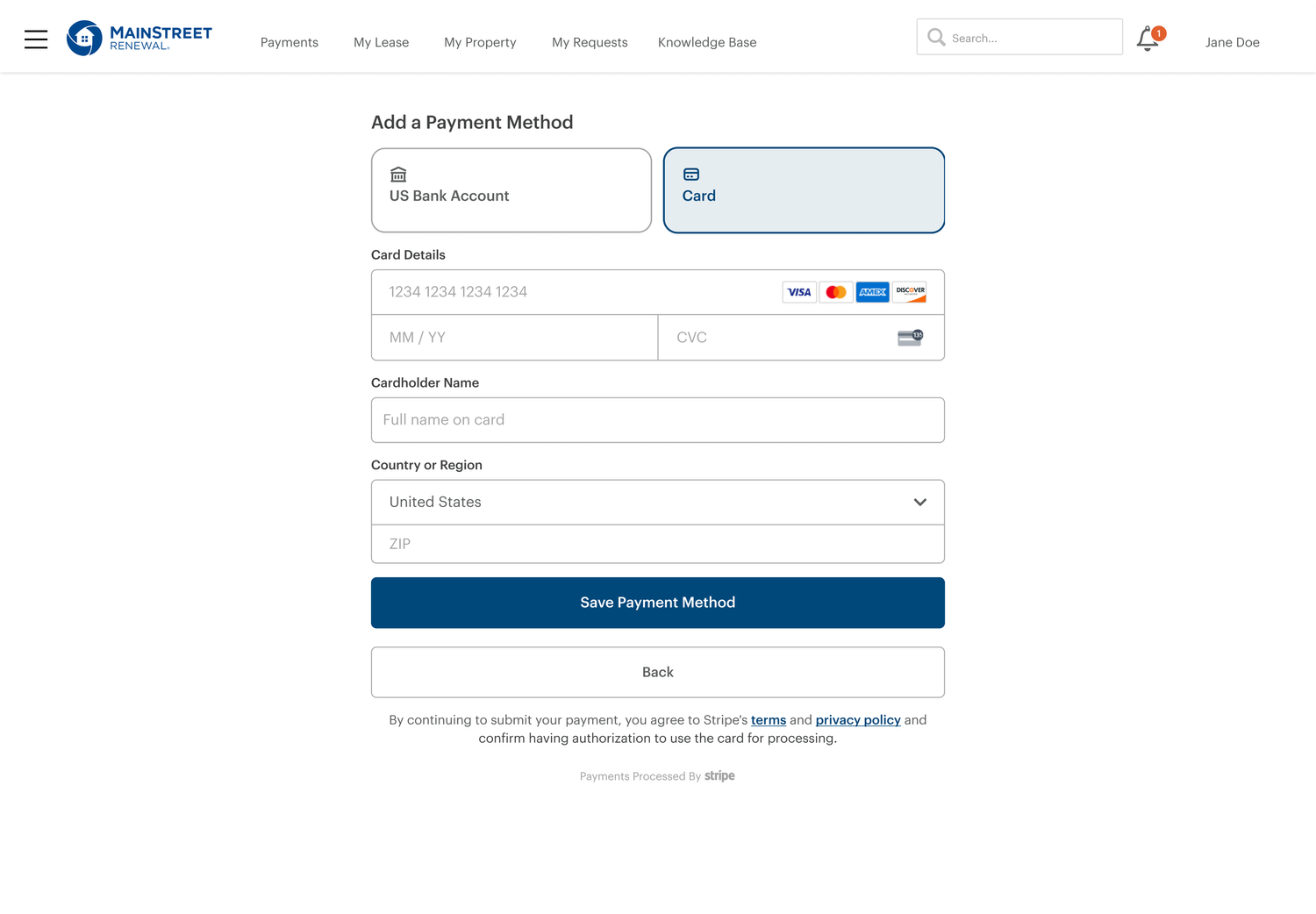
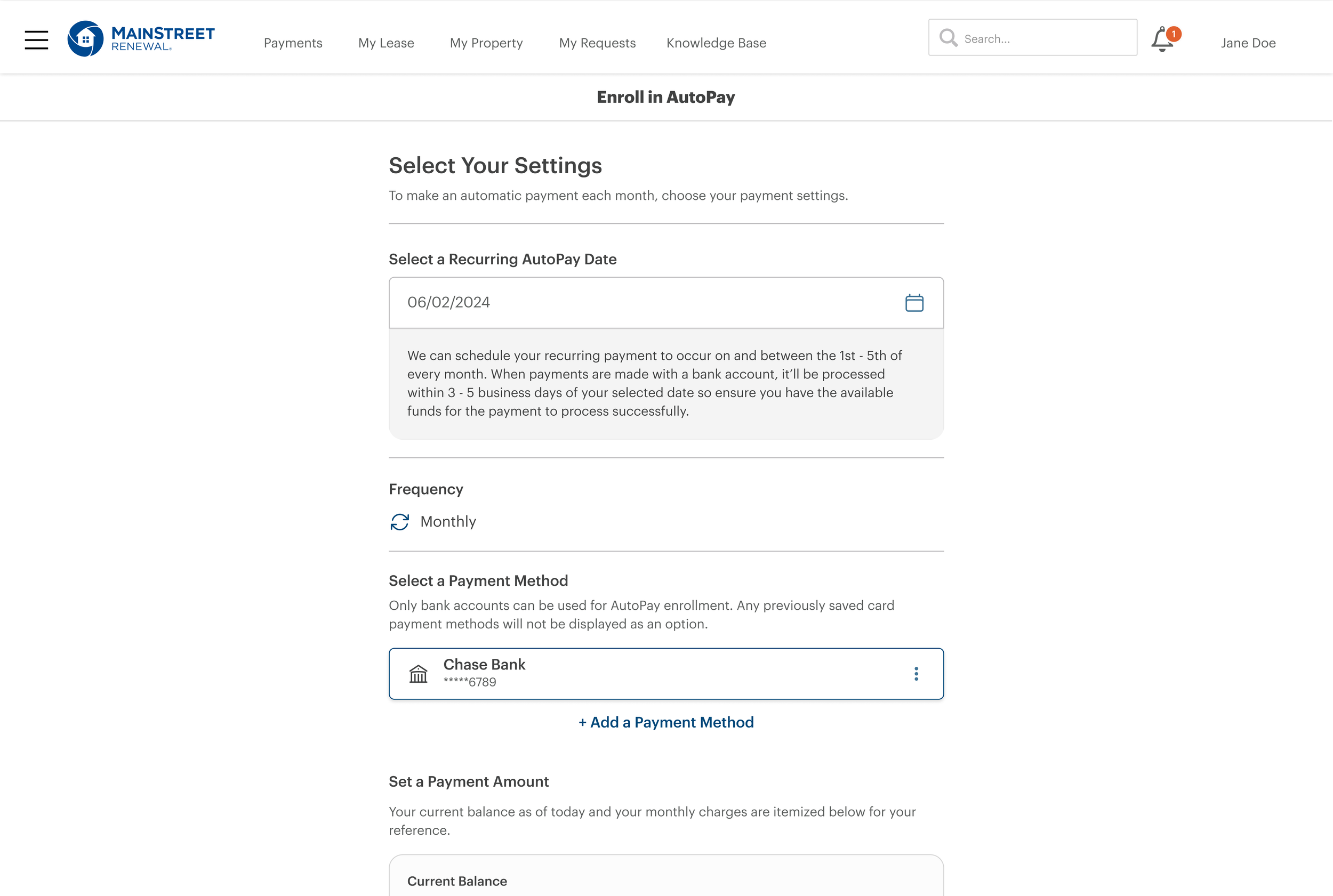
Payment
Application status
Renewal
Resident portal
lease conversions
support calls
application approval
up from ~40%
The application was only one part of a much larger problem.
Main Street Renewal manages thousands of single-family rental homes across the U.S. The application was often the first meaningful interaction a prospective resident had with the company—and the experience was falling short.
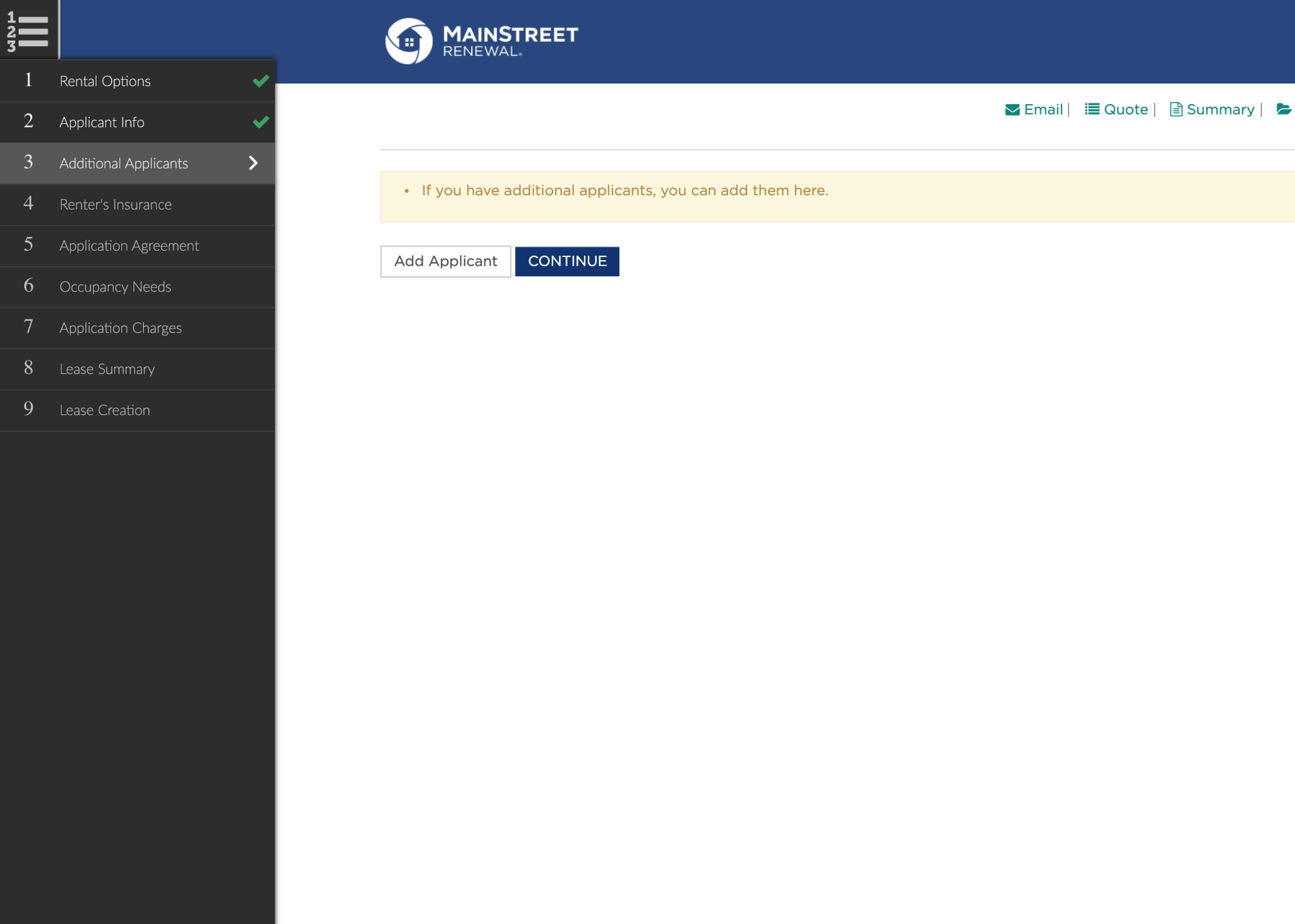
Applicants navigated a lengthy, outdated application with little guidance about what came next. Manual verification and operational processes created additional work for leasing teams.
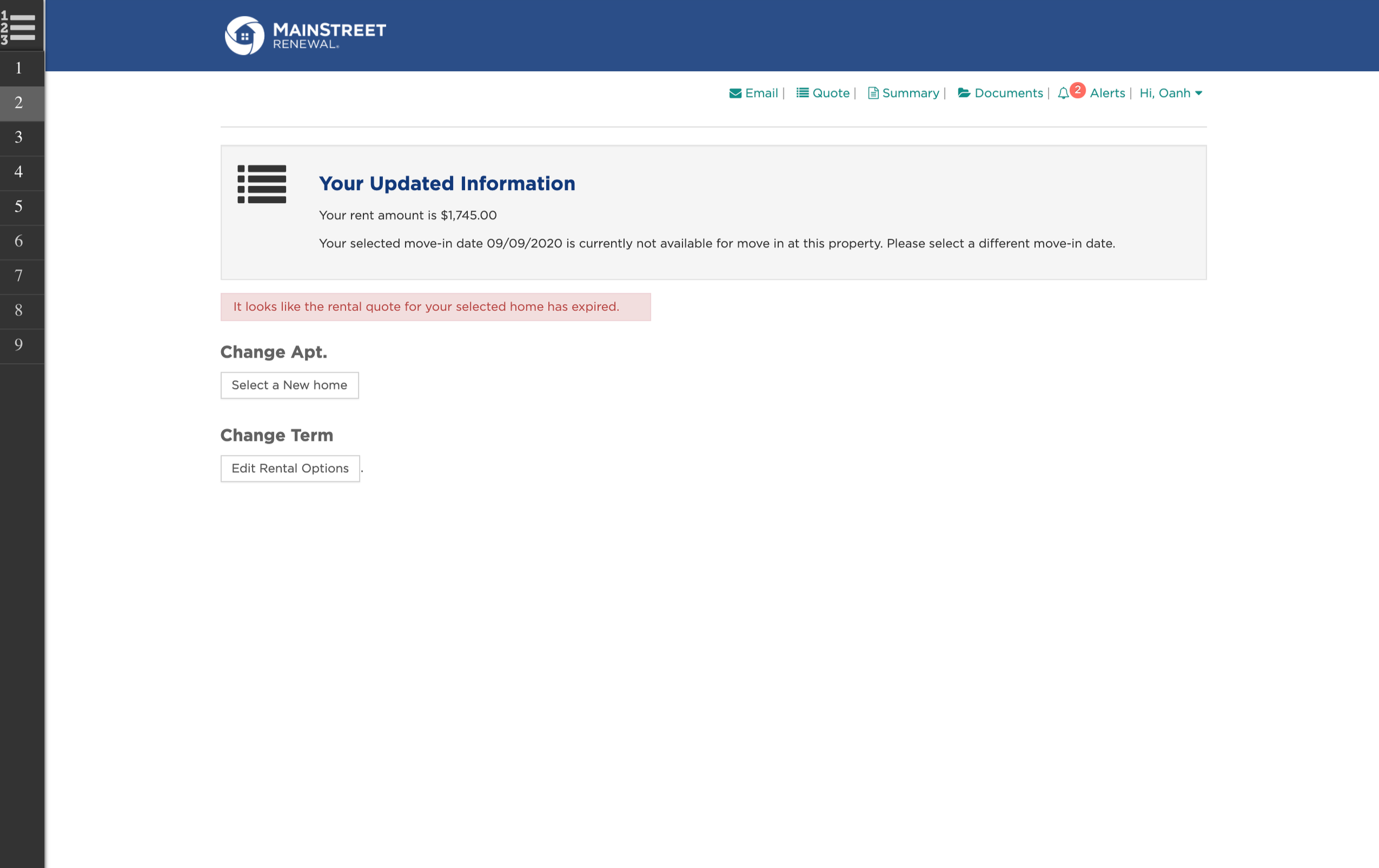
The existing experience was constrained by Yardi.
Yardi's design limitations restricted how much we could improve the application within the existing platform. The redesign required us to rethink not only the interface, but the system supporting it.
Across the resident lifecycle, Amherst was spending approximately $1M annually on customer service calls.
The opportunity wasn't simply to make the application look better. We needed to reduce friction for residents while reducing the operational work required to support them.
A broken first impression
Outdated UI and limited guidance made the first interaction feel harder than it needed to be.
Slow approval
Manual identity verification and screening created operational work and slowed the path to approval.
Application drop-off
Lengthy requirements and mobile friction caused applicants to abandon before completion.
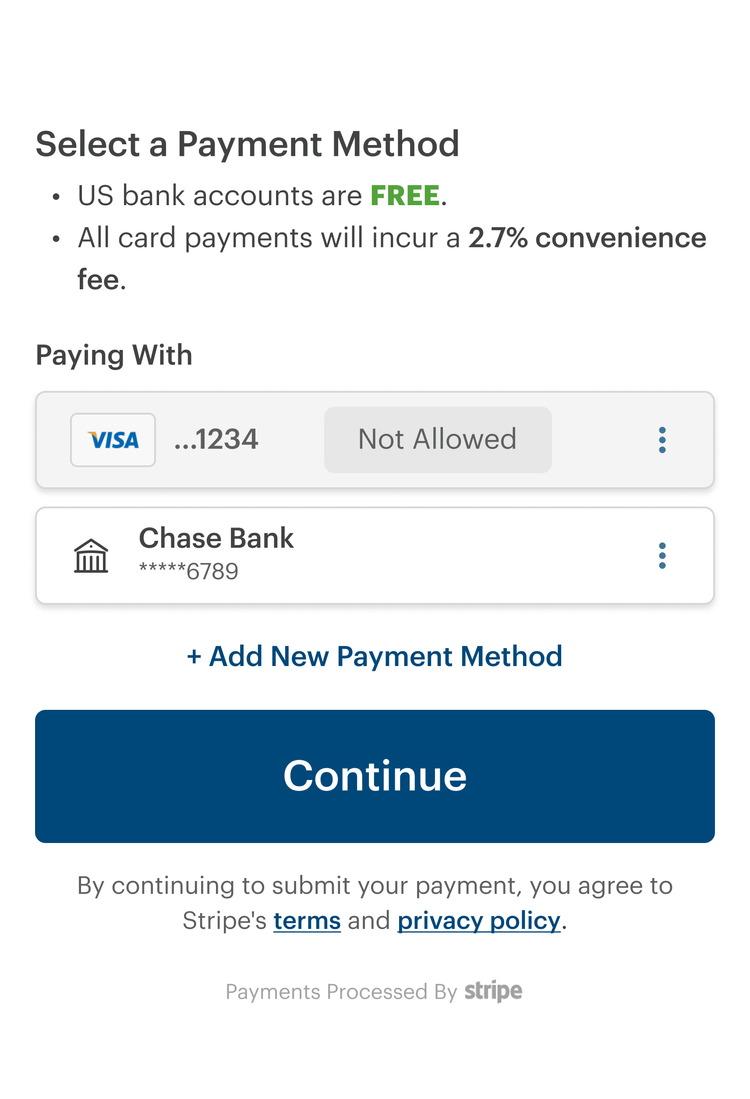
One payment platform
Moving to Stripe created an opportunity for a scalable payment experience across the resident lifecycle.
The application was only one part of a much larger problem.
Main Street Renewal manages thousands of single-family rental homes across the U.S. The application was often the first meaningful interaction a prospective resident had with the company—and the experience was falling short.
Applicants navigated a lengthy, outdated application with little guidance about what came next. Manual verification and operational processes created additional work for leasing teams.
The existing experience was constrained by Yardi.
Yardi's design limitations restricted how much we could improve the application within the existing platform. The redesign required us to rethink not only the interface, but the system supporting it.
Across the resident lifecycle, Amherst was spending approximately $1M annually on customer service calls.
The opportunity wasn't simply to make the application look better. We needed to reduce friction for residents while reducing the operational work required to support them.
A broken first impression
Outdated UI and limited guidance made the first interaction feel harder than it needed to be.
Slow approval
Manual identity verification and screening created operational work and slowed the path to approval.
Application drop-off
Lengthy requirements and mobile friction caused applicants to abandon before completion.
One payment platform
Moving to Stripe created an opportunity for a scalable payment experience across the resident lifecycle.
Understanding where the experience was breaking down.
We combined an audit of the existing application with product data and feedback from applicants and leasing teams to understand where people were getting stuck—and where those problems created more operational work.
Mapping the existing experience
Our PM and I mapped the application end-to-end to identify friction, dependencies, and where the experience was creating unnecessary complexity.
Finding where applicants dropped off
Funnel data showed where applicants were abandoning the process. With ~80% of applicants on mobile, mobile friction couldn't be treated as a secondary problem.
Connecting applicant and operational pain
Feedback from applicants and leasing teams helped us understand where confusion was creating support calls, manual work, and delays in the application process.
The problem wasn't simply that the application was too long.
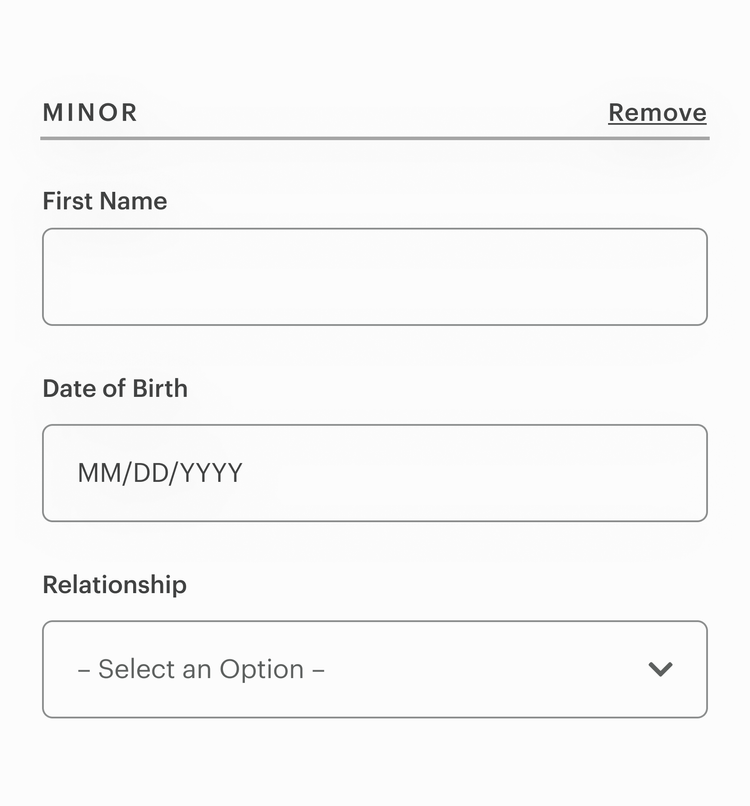
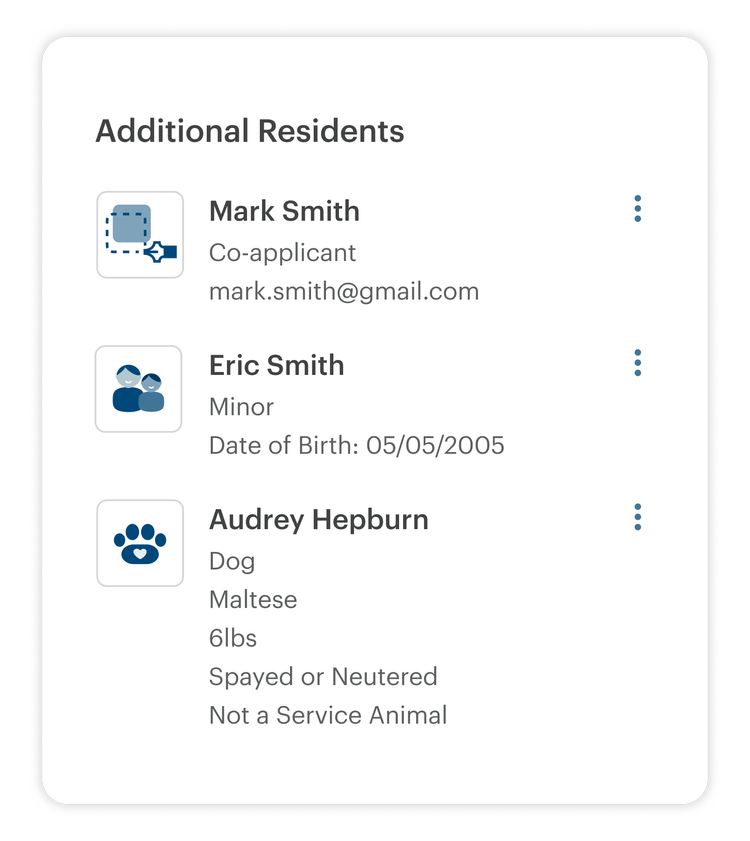
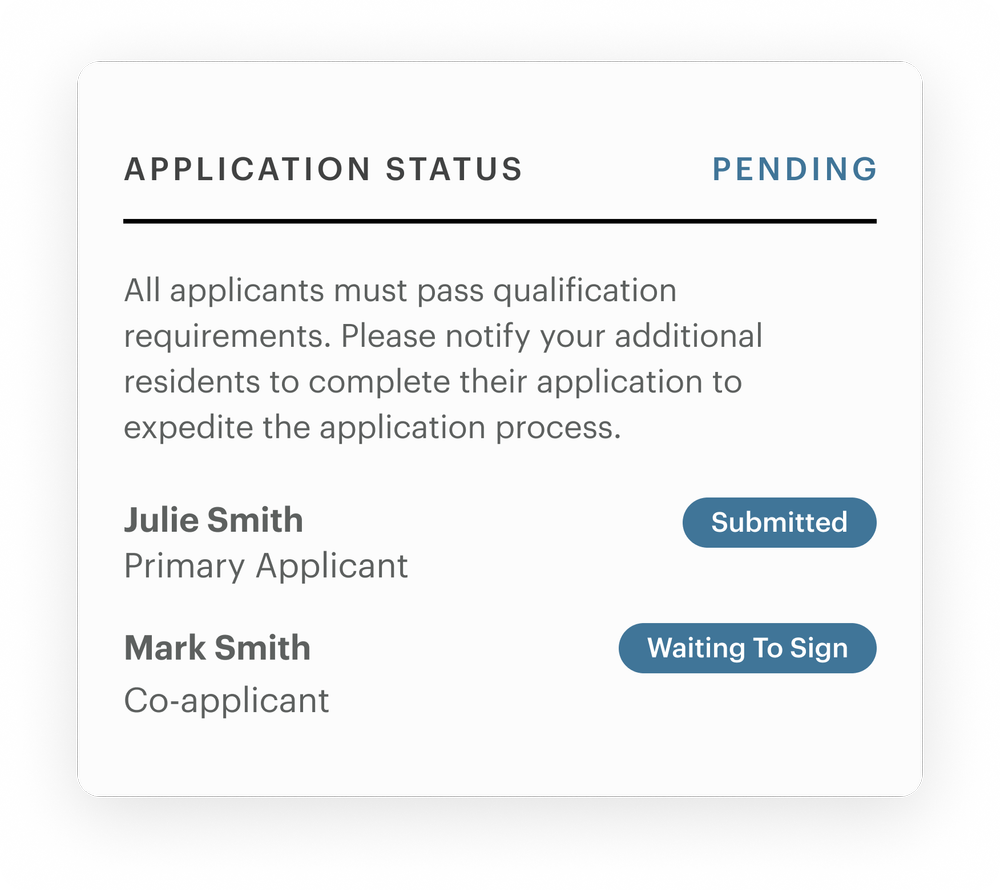
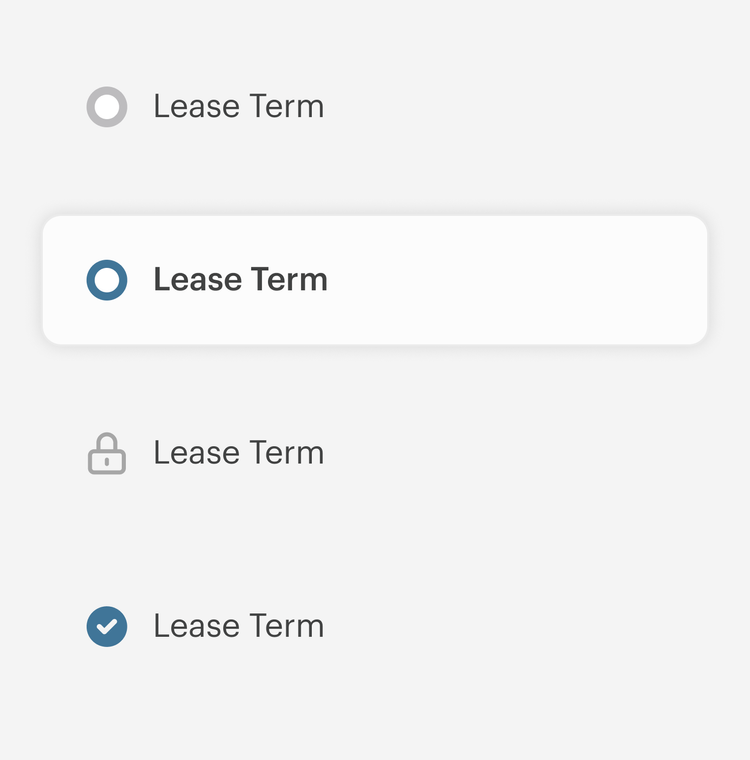
Applicants needed to understand where they were, what they needed to do next, and what other household members were responsible for. Those same gaps were creating additional work for leasing teams.
The application needed more than a redesign.
Yardi's design limitations constrained how far we could improve the experience. Rather than continue working around those limitations, the team moved toward a custom application experience with greater control over the resident journey.
How do we redesign the application?
How do we create a resident experience that removes unnecessary complexity from the entire journey?