

Spredfast · Social Media Platform
Helping enterprise teams manage an increasingly complex social ecosystem.
Spredfast was a B2B social media management platform used by large brands to plan campaigns, publish content, manage conversations, and understand performance across social channels. I worked as a Product Designer within a larger product design team, contributing to the platform as social marketing expanded beyond organic publishing into paid media.

01 · Context
Social marketing was getting more complicated.
Spredfast had been built around managing organic social content. As paid social became a larger part of customers' marketing strategies, teams were managing organic content alongside ads, agencies, accounts, permissions, schedules, and performance data.
The product needed to evolve without turning that additional complexity into a harder experience for customers.
02 · Across the Platform
This wasn't a standalone feature.
Adding paid media affected multiple parts of the existing product. Rather than creating an entirely separate destination for ads, the team explored how paid activity could fit into workflows customers already understood.
Calendar
See paid and organic activity together.
Ad Details
Understand what is running without leaving the current workflow.
Filters
Navigate increasingly complex campaign activity.
Governance
Control visibility and access across teams and agencies.
03 · Understanding the Workflow
Learning how paid media changed the way teams worked.
Product, Design, and Engineering worked together to understand how paid social workflows differed from the organic workflows Spredfast already supported. Customer conversations helped surface where the existing experience would need to stretch.
Paid and organic were disconnected
Marketing teams wanted a more complete view of their social activity instead of moving between separate workflows.
Agency relationships added complexity
Large organizations often worked with outside agencies, creating questions around visibility, ownership, and access.
More content meant more ways to find it
Introducing ads increased both the amount and type of information customers needed to navigate.
The existing product still mattered
Customers already knew Spredfast's publishing and calendar patterns. Paid media shouldn't require relearning the product.
Extend familiar workflows instead of creating another system to manage.
04 · Exploration
Finding where paid media belonged.
Our team explored how ads could fit naturally into the existing product architecture. Early concepts focused on the places where paid activity intersected most directly with familiar workflows.

05 · One Calendar
Paid and organic, viewed together.
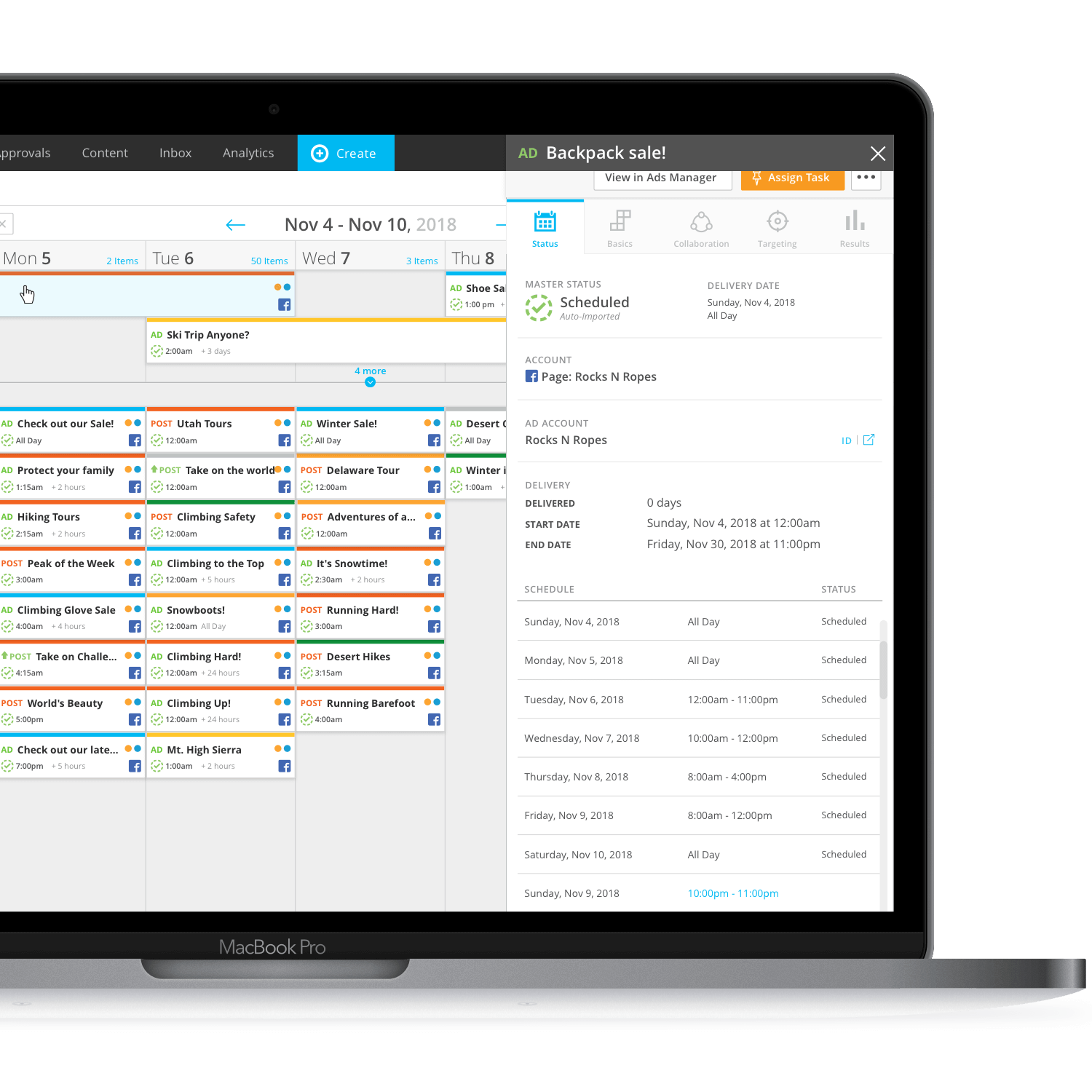
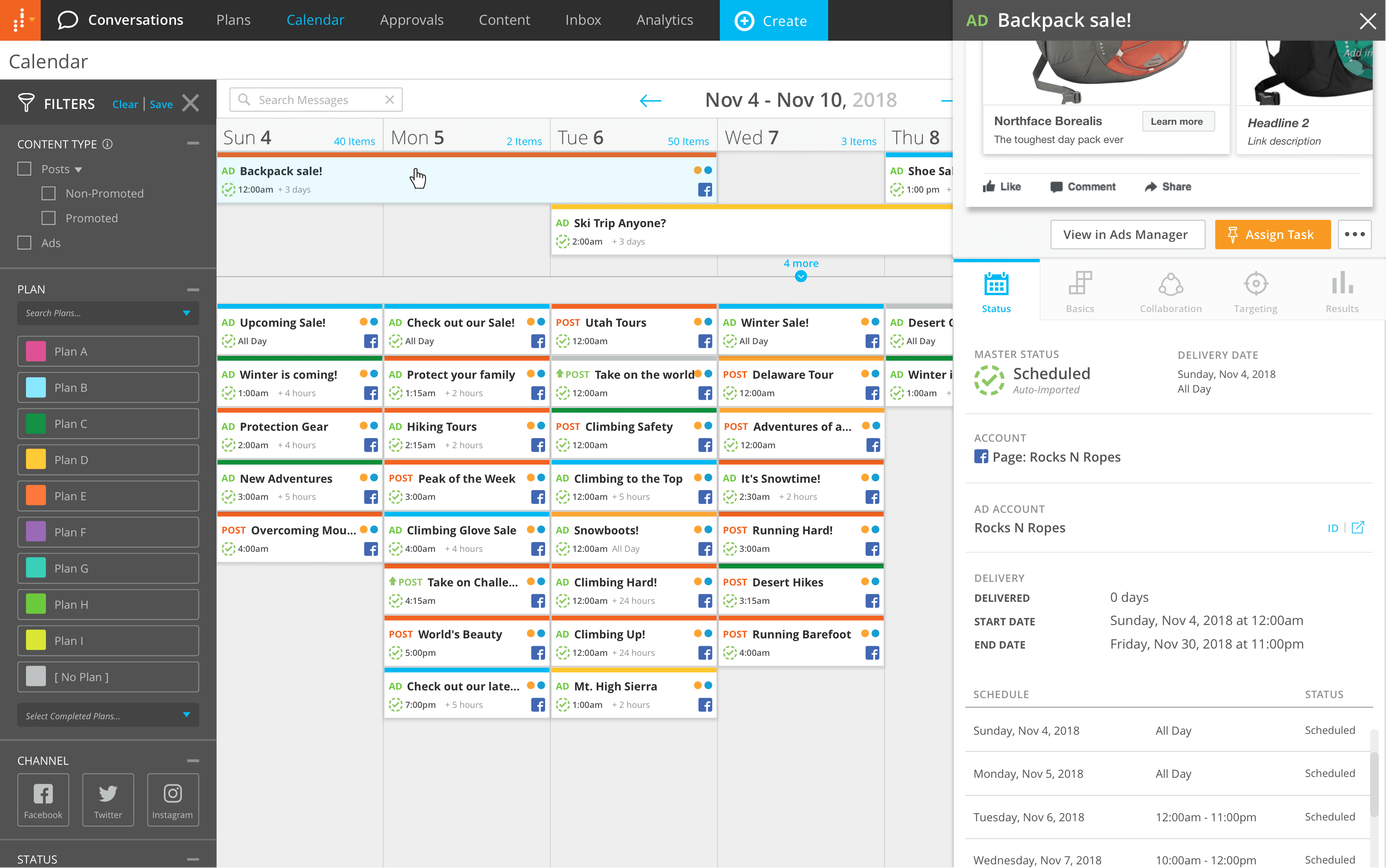
The calendar was already one of the primary ways customers understood what their teams were publishing. The experience evolved to include paid ads alongside organic content instead of separating the two.
Ads could span multiple days, so the calendar also needed to communicate duration differently from a traditional social post.


06 · Ad Details
More context, same workflow.
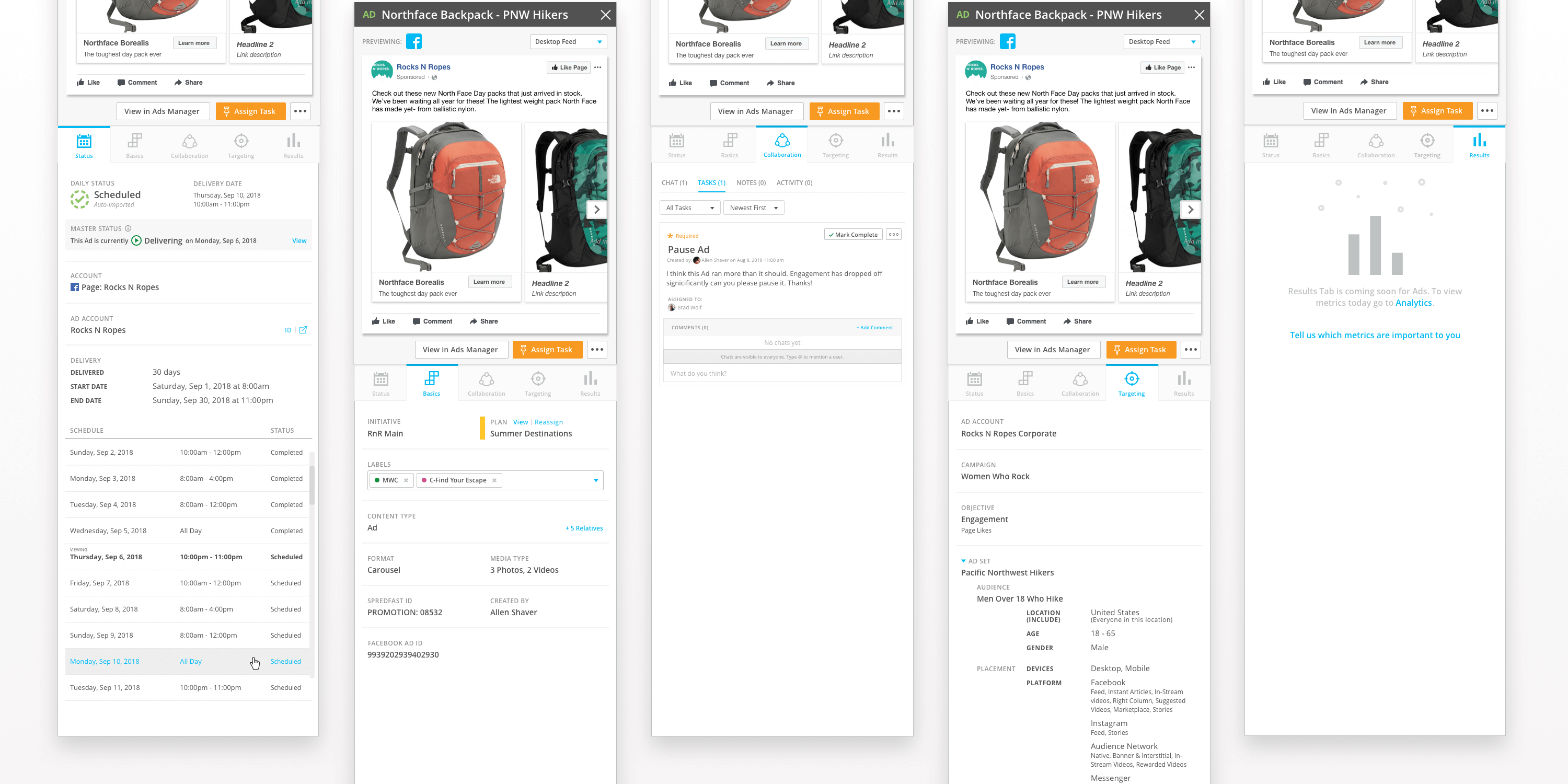
Paid content carried significantly more information than a typical organic post. The side panel surfaced the context teams needed while keeping the calendar visible behind it.
07 · Filters
Finding the signal.
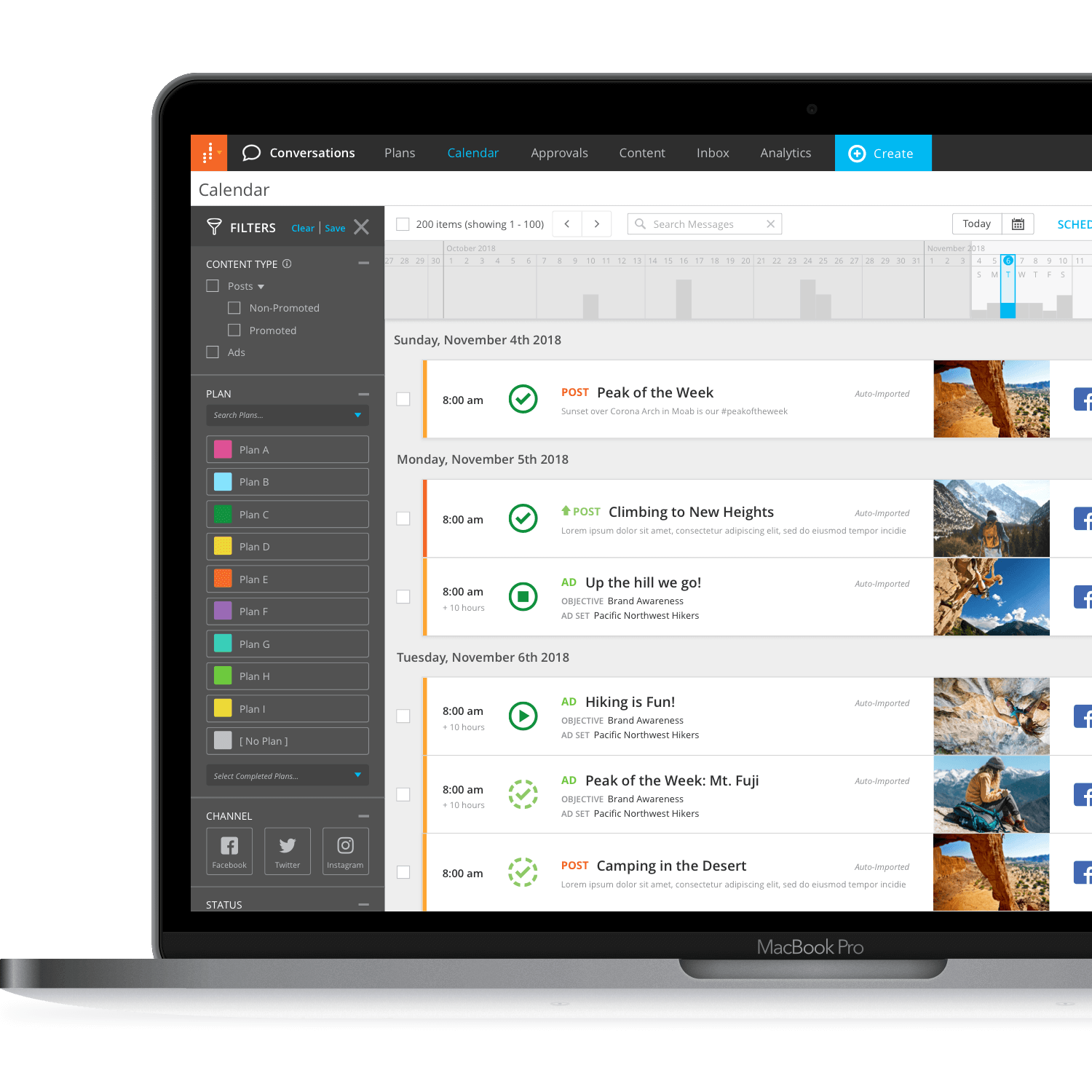
Adding paid media meant customers could potentially see significantly more activity in the calendar. Filters became an important part of keeping that complexity manageable.
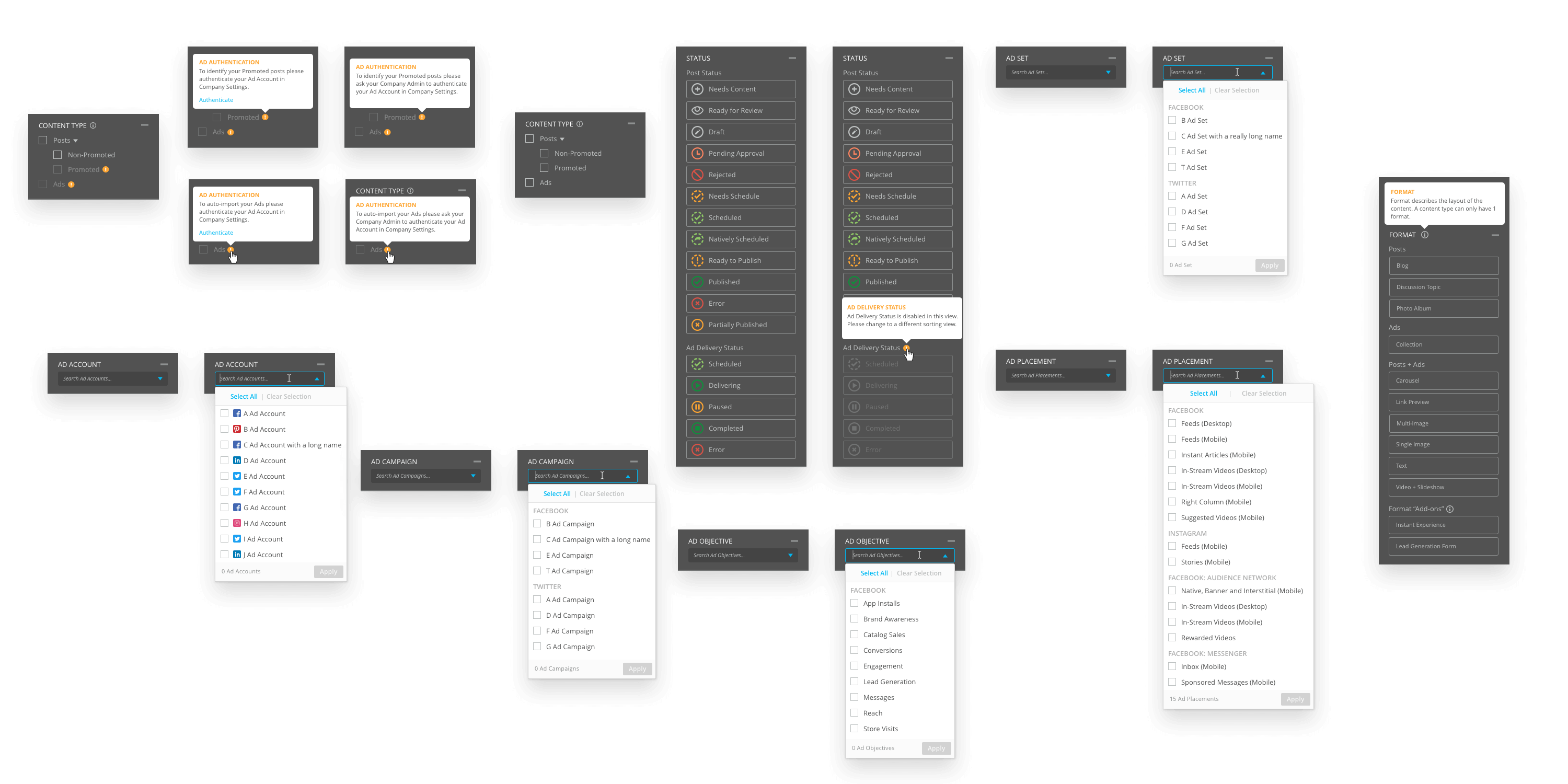
08 · Governance
Paid media wasn't only a content problem.
Enterprise customers often had internal marketing teams working alongside multiple agencies. That introduced another layer of complexity around who could view, publish, and manage specific ad accounts.
Governance tools gave organizations greater control over account access and permissions while maintaining visibility across the broader organization. Activity history added another layer of transparency across teams.


09 · Early Access
Learning with customers.
Early Access customers gave the product team feedback as the paid-media experience developed, helping validate the value of seeing paid and organic activity together.
“We’ve been thirsty for a long time to see both paid and organic in Spredfast on the Calendar.”
“This is going to help immensely.”
10 · Early Adoption
The new experience gained traction quickly.
These were team-level product outcomes, reflecting the combined work of Product, Design, Engineering, and our Early Access customers.
11 · Reflection
Enterprise design is often about deciding where complexity should live.
Working on Spredfast reinforced that simplifying a product doesn't necessarily mean removing complexity. Paid social brought campaign structures, permissions, agencies, platforms, and account relationships that couldn't simply disappear.
The design challenge was deciding what customers needed to understand and what the product could manage for them. Working within a larger design organization also taught me how to contribute to a shared system—aligning patterns across teams, designing within an established product, and collaborating closely as new capabilities touched multiple areas of the platform.